The Blog
A Leaf Through Time: The History of Tea in China
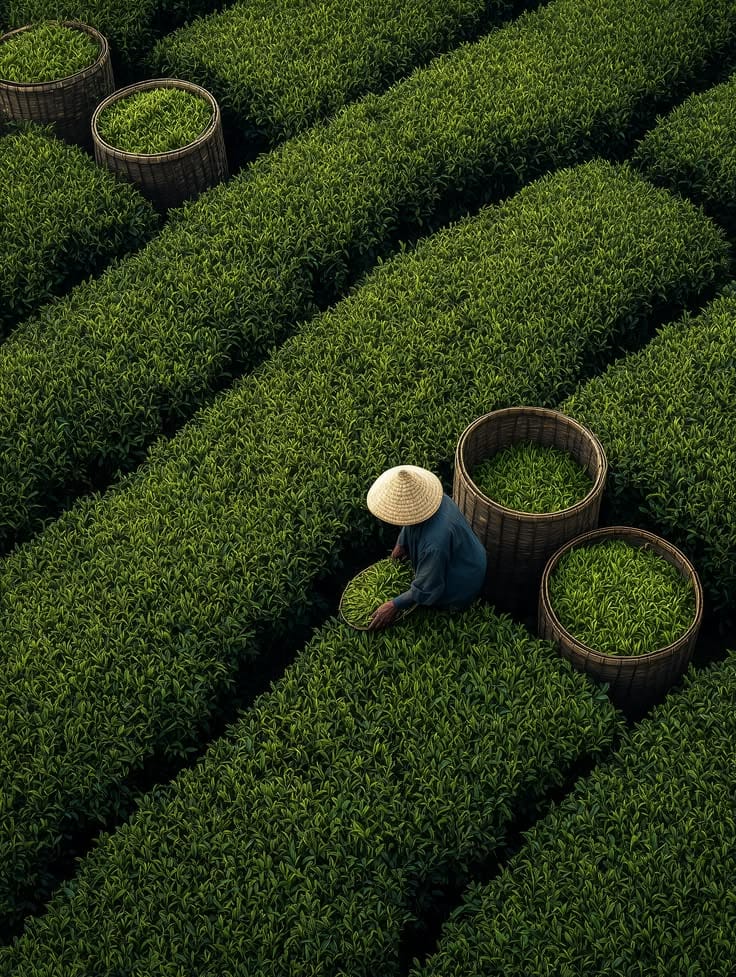
Every cup of tea, wherever it is poured, leads back to China. It is where the tea plant, Camellia sinensis, first grew wild, where people first learned to drink it, and where almost every way of making tea was invented. Here is a short journey through nearly five thousand years of history, from legend to the loose leaves in our tins today.
The legend of Shennong
Chinese tradition says tea was discovered around 2737 BC by Shennong, the mythical "Divine Farmer" and father of herbal medicine. As the story goes, he was boiling water in the shade of a wild tea tree when a few leaves drifted into his pot. He tasted the golden infusion, felt refreshed, and a new drink was born.
It is a legend rather than history, but it holds a real truth: tea began in the forests of south-west China, in today's Yunnan and Sichuan, where ancient wild tea trees still grow. For centuries the leaves were chewed, cooked into broths or taken as medicine before they became an everyday drink.
The oldest tea ever found
Archaeology has caught up with the stories. Tea leaves found in the tomb of Emperor Jing of the Han dynasty, who died in 141 BC, are among the oldest physical evidence of tea in the world. By the Han dynasty, tea was already being traded and valued well beyond its native mountains.
The Tang dynasty: tea becomes an art (618–907)
Under the Tang, tea spread across all of China and became part of daily and spiritual life. Leaves were steamed, pressed into cakes, roasted, ground and boiled, often with a pinch of salt.
Around 760 AD the scholar Lu Yu wrote The Classic of Tea (Cha Jing), the first book ever written about tea. He described how to grow it, process it, choose the right water and serve it with care. Lu Yu turned a drink into a ritual, and he is still honoured in China as the Sage of Tea.
The Song dynasty: whisked tea and tea contests (960–1279)
In the Song dynasty, tea cakes were ground into a fine powder and whisked with hot water into a light froth in dark glazed bowls. Scholars and even emperors held tea contests, judging the colour of the foam and how long it lasted. Emperor Huizong himself wrote a famous treatise on tea.
This whisked powdered tea travelled to Japan with Buddhist monks at the end of the 12th century. China later moved on from it, but in Japan it lived on and became matcha, which we explore in our matcha guide.
The Ming dynasty: the birth of loose-leaf tea (1368–1644)
In 1391 the Hongwu Emperor ordered the end of the elaborate compressed tea cakes sent to the court as tribute, preferring simple loose leaves. This changed everything. People began to steep whole leaves in hot water, the way most of the world drinks tea today.
New methods followed: pan-firing green tea to keep it fresh, small clay teapots from Yixing, and over time the rolling, oxidising and roasting that gave birth to oolong and black tea in the Wuyi mountains of Fujian.
Tea travels the world
For centuries tea moved along the Tea Horse Road, carried on mules and on people's backs from Yunnan and Sichuan to Tibet, often traded for horses. By sea, Dutch merchants brought tea to Europe in the early 1600s, and the British soon followed. Tea became so valuable that in the 1840s the botanist Robert Fortune was sent to China to collect tea plants and secrets, helping start the tea gardens of India.
The six families of Chinese tea
All true tea comes from the same plant. What makes each family different is how the leaves are handled after picking, especially how much they are allowed to oxidise:
- Green tea: heated soon after picking to stop oxidation. Fresh, grassy and bright.
- White tea: simply withered and dried. Delicate, honeyed and soft.
- Yellow tea: a rare green tea that is gently "smothered" to mellow its taste.
- Oolong tea: partly oxidised, from floral and creamy to toasty and deep.
- Black tea: fully oxidised. Called hong cha, "red tea", in China for the colour of its cup.
- Dark tea: aged and fermented teas such as Pu-erh, rich and earthy.
China also gave the world scented teas, like jasmine tea, made by layering tea leaves with fresh jasmine blossoms night after night.
From ancient gardens to your cup
Thousands of years later, the same care Lu Yu wrote about still matters: good leaves, the right water temperature and a moment of calm. At The Royal Gardens we source organic teas from gardens across China and Asia and pack them fresh in Beirut, so you can taste this long history in every cup.
Explore our teas and start your own journey through Chinese tea.
